
Summary
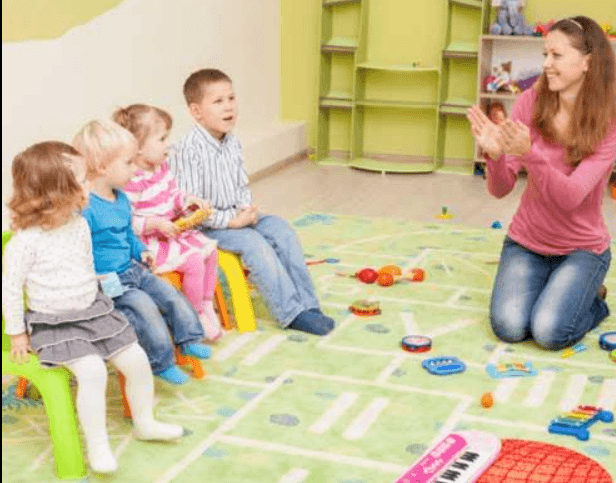
Clap Pattern is a rhythm imitation game where the educator claps a pattern and children repeat it. It supports memory, listening, and early pattern awareness.
What you need
- Hands
- Optional drum or table for tapping
Learning focus
- Listening
- Working memory
- Rhythm and pattern
- Attention
EYLF links
Early Years Learning Framework (EYLF)
Outcome 4: Children are confident and involved learners
Children recognise and repeat patterns, explore rhythm, and solve simple auditory tasks.
Outcome 5: Children are effective communicators
Children respond to auditory cues and take part in shared rhythm.
How to do it as an educator
- Ask children to sit or stand where they can watch you.
- Clap a short pattern, such as clap-clap-pause-clap.
- Ask children to copy the pattern.
- Repeat if needed.
- Try new patterns as children become more confident.
Extend the activity
- Add stomping or tapping knees.
- Invite children to create their own patterns.
- Use fast and slow patterns.
- Connect the pattern to songs.
Inclusive practice
For ADHD / high energy learners
- Keep the patterns short.
- Add movement like clapping and stomping.
For autistic children
- Repeat the same pattern several times before changing.
For children with hearing differences
- Use visual hand cues and visible tapping.
- Let children feel rhythm through table tapping.
For children with low vision
- Use sound and touch-based rhythm.
For mobility needs
- Adapt the response, such as tapping a tray or moving fingers.
For speech or language delay / EAL
- This activity can be done without speech.
For sensory or emotional needs
- Keep the volume comfortable.
Educator notes
This is useful for mat time, transitions, and attention resets.
Designed for : 3–5 years
Comments are closed