
Summary
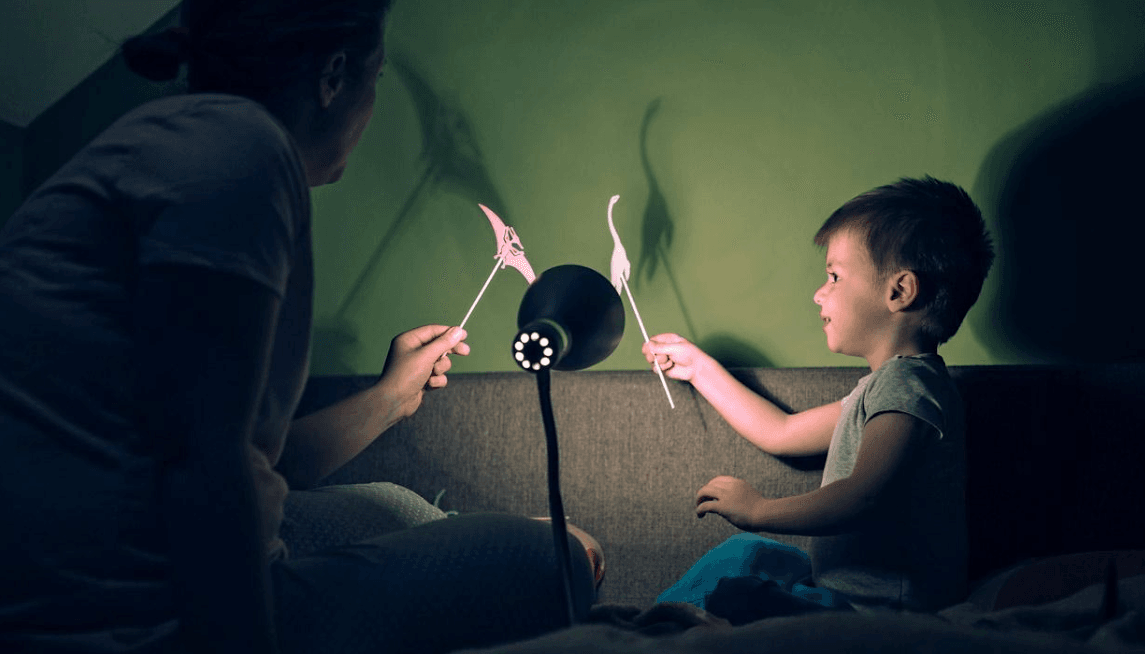
Shadow Play uses a light source and hands or objects to make shadows. It encourages curiosity, imagination, and exploration of light and shape.
What you need
- Torch, lamp, or projector
- Wall or flat surface
- Optional simple objects or puppets
Learning focus
- Imagination and creativity
- Cause and effect
- Visual exploration
- Language and storytelling
EYLF links
Early Years Learning Framework (EYLF)
Outcome 4: Children are confident and involved learners
Children explore light, shadow, change, and experimentation through play.
Outcome 5: Children are effective communicators
Children describe shapes, tell stories, and communicate ideas using movement and words.
How to do it as an educator
- Darken the room slightly if possible.
- Shine a light onto a wall.
- Show children how your hand can make a shadow.
- Invite them to try their own hand shapes or objects.
- Talk about what happens when the hand moves closer or further away.
Extend the activity
- Make animal shadows.
- Turn shadows into a story.
- Compare big and small shadows.
- Use objects like leaves or blocks.
Inclusive practice
For ADHD / high energy learners
- Keep it hands-on and interactive.
For autistic children
- Start with simple, predictable shapes.
For children with hearing differences
- This activity is strongly visual and can be very accessible.
For children with low vision
- This may need adaptation with strong contrast, touch, and verbal description.
For mobility needs
- Children can participate seated.
For speech or language delay / EAL
- Encourage pointing or choosing instead of full verbal description.
For sensory or emotional needs
- Use gentle lighting and avoid making the room too dark if that feels unsettling.
Educator notes
Shadow Play is a strong example of simple STEM learning through creative play.
Designed for : 3–5 years
Comments are closed