
Summary
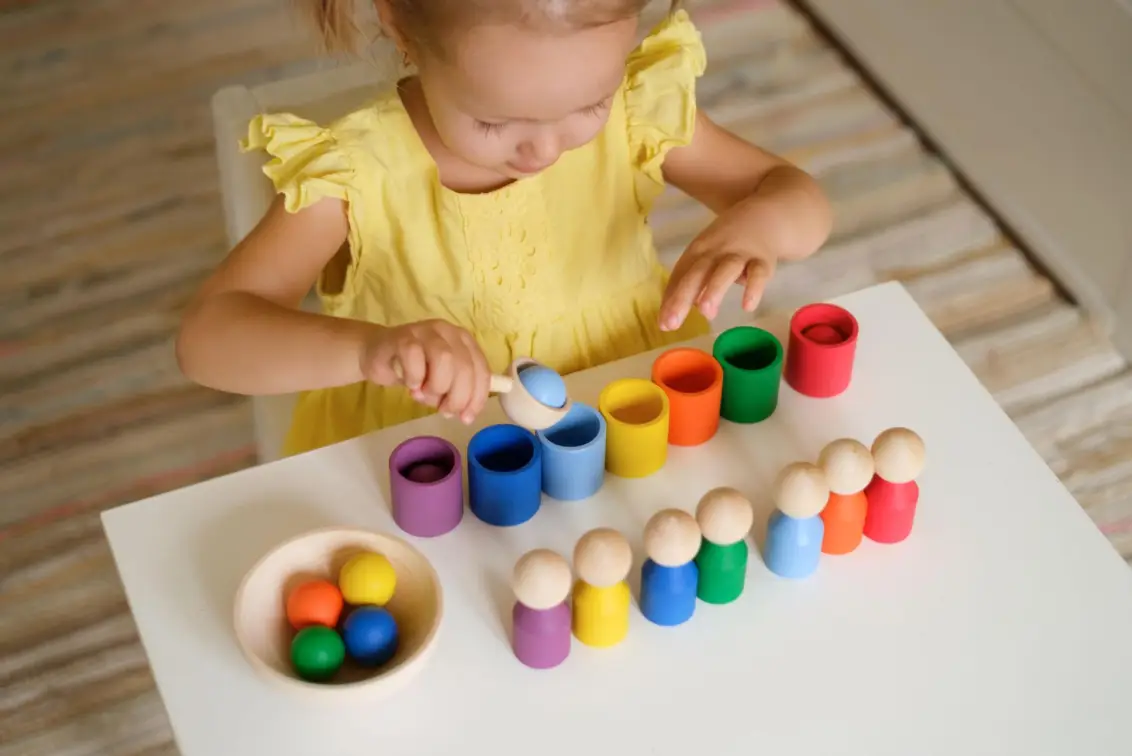
This Colour Hunt childcare activity is a fun and engaging way for children to learn colours through play. It helps develop observation skills, focus, and early learning in a simple and interactive way.What you need
- Objects already in the room
- Optional colour cards or coloured paper
Learning focus
- Colour recognition
- Observation and attention
- Listening skills
- Vocabulary development
EYLF links
Early Years Learning Framework (EYLF)
Outcome 4: Children are confident and involved learners
Children use inquiry, problem-solving, and observation to find matching colours in their environment.
Outcome 5: Children are effective communicators
Children listen to instructions, learn colour words, and may describe what they find.
How to do it as an educator
- Gather the children and explain that you are going to play a colour finding game.
- Name one colour, for example, “Find something red.”
- Ask children to point to, touch, or bring an object that matches the colour.
- Invite children to share what they found.
- Repeat with different colours.
Extend the activity
- Ask children to find two objects of the same colour.
- Ask children to sort objects by colour.
- Let children choose the next colour.
- Try colour hunts outdoors.
Inclusive practice
ADHD / high energy learners
- Let them move to touch the object.
- Give them a helper role, such as choosing the next colour.
Autistic children
- Use a visual colour card first.
- Keep the routine predictable.
Children with hearing differences
- Show the colour visually instead of only saying it.
Children with low vision
- Use high-contrast or textured objects.
- Let them explore objects up close.
Mobility needs
- Allow pointing instead of moving around the room.
Speech or language delay / EAL
- Model the colour word clearly.
- Accept pointing or showing instead of speaking.
Sensory or emotional needs
- Keep the group small.
- Avoid making it competitive.
Educator notes
This activity works well as a warm-up, transition, or quick focus reset. It is also easy to repeat with different age groups.
Designed for : 2–5 years
Comments are closed